
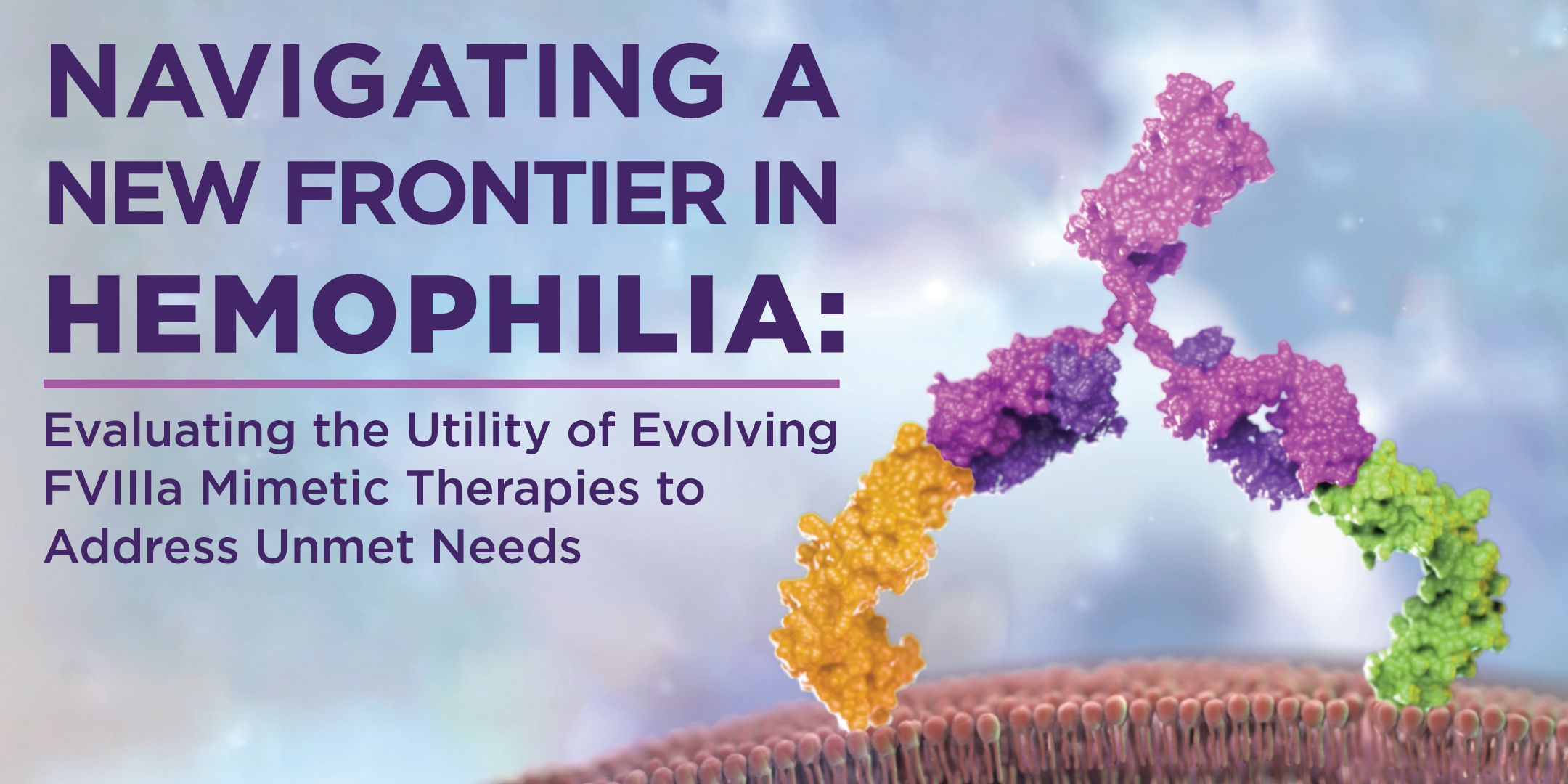
Walk-up registration available on-site. Course unlocks at 6:45 PM PT.
Hemophilia care is entering a new era with innovative factor and nonfactor therapies designed to overcome persistent challenges such as inhibitor development, frequent dosing, and treatment burden. This activity will explore available and emerging next-generation agents, including mechanisms of action, pharmacokinetics, dosing strategies, and clinical implications in patient care.
Current and emerging data from pivotal trials will be discussed, along with practical considerations for integrating these therapies into clinical practice. Through interactive, case-based scenarios, learners will gain insights into patient selection, switching protocols, and individualized treatment planning, ensuring a patient-centered approach to hemophilia management.
This initiative is intended for hematology and hematology/oncology HCPs and other clinicians who provide care to patients living with hemophilia.
After participating in this activity, learners will be able to:
- Distinguish the structure and biophysical function of approved and next-generation FVIIIa mimetics and the related impact on PK/PD and dosing
- Evaluate clinical evidence on emerging FVIIIa mimetics as prophylaxis across varying hemophilia patient populations
- Assess clinical considerations for integrating emerging FVIIIa mimetics into hemophilia management, including patient selection and switching from other therapies
- Unmet needs related to factor replacement therapies
- Nonfactor therapy strategies: clinical rationale and opportunities to address unmet needs
- FVIIIa mimetic overview: mechanisms of action and clinical principles
- Emicizumab: clinical data, real-world evidence, and remaining unmet needs
- Introduction to next-generation factor mimetic therapy and development status
- Structure and binding comparison with first-generation treatments
- Clinical trial data: patient populations, dosing frequency, long-term extensions, inhibitor status, and switching considerations
- Who is a good candidate for FVIIIa mimetic therapy?
- Where might next-generation FVIIIa mimetic therapies fit in patient care?
- What might switching protocols look like?
- Considerations for patients with hemophilia B
Cancer and Blood Disease Institute
Children’s Hospital Los Angeles
Professor of Pediatrics, USC Keck School of Medicine

Anne T. and Robert M. Bass Endowed Faculty Scholar in Pediatric Cancer and Blood Diseases
Director of Hematology Research
Stanford University School of Medicine / Lucile Packard Children’s Hospital

University of Washington School of Medicine
Scientific Director, Washington Center for Bleeding Disorders — Seattle, WA

This activity is jointly provided by AKH Inc., Advancing Knowledge in Healthcare and Catalyst Medical Education, LLC.
This activity is supported by an educational grant from Novo Nordisk, Inc.
 |
In support of improving patient care, this activity has been planned and implemented by AKH Inc., Advancing Knowledge in Healthcare and Catalyst Medical Education, LLC. AKH Inc., Advancing Knowledge in Healthcare is jointly accredited by the Accreditation Council for Continuing Medical Education (ACCME), the Accreditation Council for Pharmacy Education (ACPE), and the American Nurses Credentialing Center (ANCC) to provide continuing education for the healthcare team. |
Physicians: AKH Inc., Advancing Knowledge in Healthcare designates this live activity for a maximum of 1.0 AMA PRA Category 1 Credit(s)™. Physicians should claim only the credit commensurate with the extent of their participation in the activity.
No fee to participate. Course unlocks at 6:45 PM PT on March 20, 2026.